


By focusing on innovation and entrepreneurship, LKCSB aims to shape the economic landscape through the transformation of business culture and workplace practices.
Innovation is the lifeblood of the modern age. Innovation helps businesses meet the needs of consumers and also society, which is why innovators and entrepreneurs hold the key to a vibrant, growing economy.
“Innovation and entrepreneurship play a vital role in driving economic growth,” notes Professor of Strategy & Entrepreneurship Reddi Kotha. “They foster creative solutions and enhance resilience in an increasingly uncertain environment.”
In addition, in an aging society like Singapore, innovation and entrepreneurship offer pathways to support the career of mid-career professionals, facilitating sustained economic growth, he adds. In an interesting case, RWDC Industries shows how growth entrepreneurs may emerge from surprising demographics. Its co-founder, Roland Wee, launched the deep-tech sustainable plastics venture at the age of 76, raising over US$168 million to scale biodegradable plastic production, an example that challenges stereotypes of age and innovation.
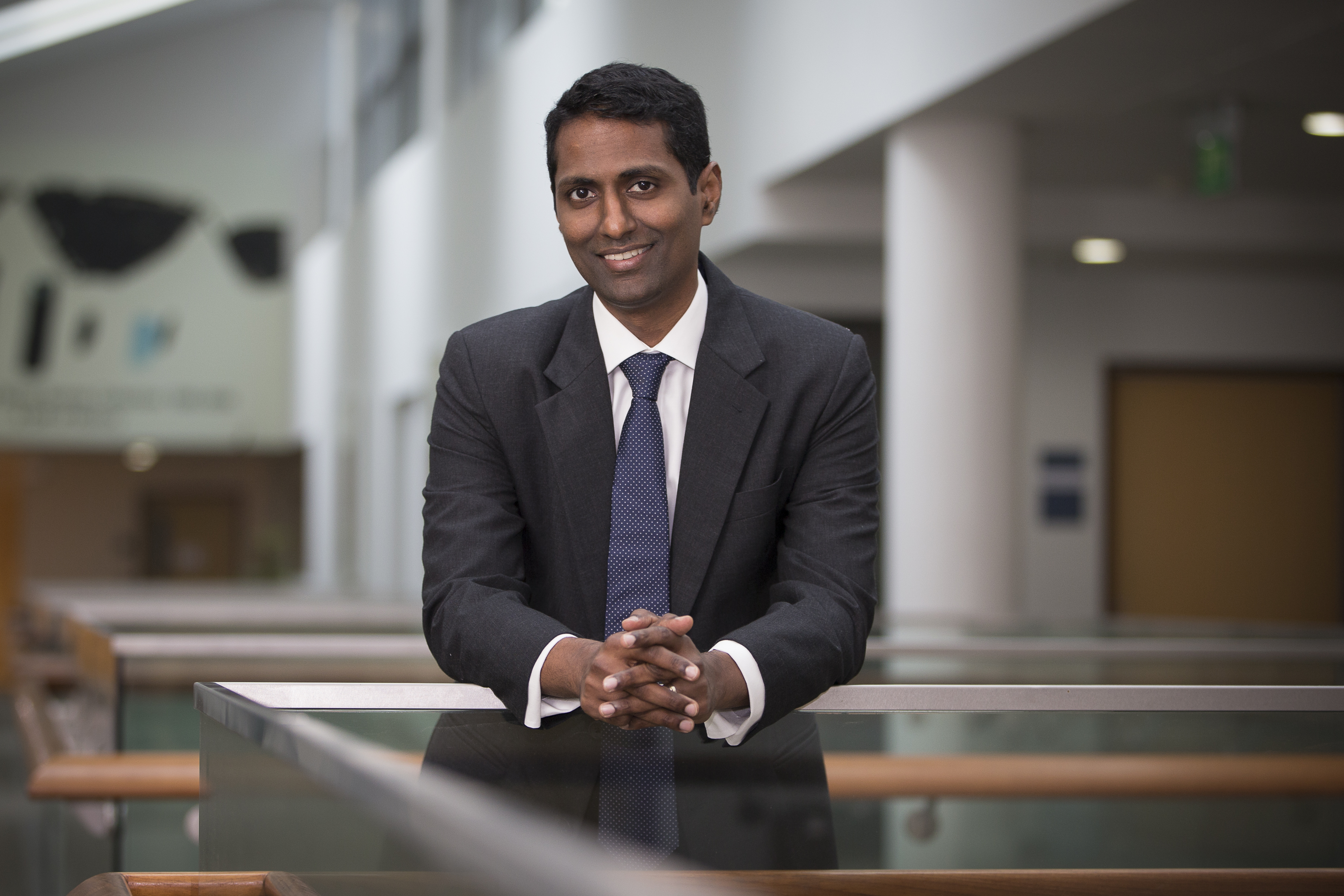 | The importance of innovation is why LKCSB has an Innovation & Entrepreneurship (I&E) Research Peak. It is led by Professor Kotha and focusses on developing interdisciplinary collaboration within LKCSB’s areas (and across SMU’s schools) that leads to impactful academic research. In addition, the research peak aims to galvanize faculty for tier II or III grant applications in the research area. A research peak is a research area that demonstrates LKCSB’s research excellence, marked by strong recognition, interdisciplinary potential and social impact. It also reflects and support the university’s strategic plans, helping to position it as a leader in several key domains of research. |
From Workshops to Collaborations
Since its inception in November 2023, the I&E Research Peak has been collaborating with Singapore Management University’s Institute of Innovation and Entrepreneurship (IIE) and the Office of the Provost to develop datasets and explore potential research opportunities with industry and government agencies.
In collaboration with IIE, the team has constructed a database on the 11th Lee Kuan Yew Global Business Plan Competition 2023, which will soon be released via SMU library for faculty and students to use in their research. Together with the Office of the Provost, the team has facilitated a potential collaboration project with SkillsFuture Singapore (SSG) on continuing education and entrepreneurship.
In addition, the research peak has also steadily built on its regular interdisciplinary workshops to connect faculty from LKCSB with colleagues in the schools of economics, social sciences, and computing & information systems. These workshop sessions typically involve faculty members and PhD students, research engineers, and post-doctorates.
These workshops “encourage open discussions, knowledge sharing, and brainstorming to identify common research interests in innovation and entrepreneurship and potential collaborations,” says Professor Kotha.
Participants have submitted proposals for competitive grants, including the Social Science and Humanities Research Thematic Grant (SSHR-TG) and the Ministry of Education’s Tier III programme.
Focus on SMEs, Startups and Training Impact
The I&E Research Peak currently focuses on three main areas: entrepreneurship research, innovation in SMEs, and innovation in large corporates.
One of its current projects looks at how innovation training can have a transformative impact on SMEs. Another explores how continuous learning can support entrepreneurship among mid-career individuals, while a third aims to develop insights for incubators, investors, and policymakers by assessing startups in their early formative stages.
Some examples of published research from faculty at LKCSB are already shaping the global conversation on innovation and entrepreneurship on topics such as:
• Board Diversity and Innovation: A paper by Assistant Professor Daniel Mack published in Research Policy shows how boardroom diversity can have a cascade effect with valuable lessons for leaders seeking to harness inclusive governance and implement policies that drive innovation outcomes.
• Scaling Digital Solutions: Associate Professor of Strategic Management Ted Tschang's work, which was published in the Journal of International Business Studies, examines how digital solutions can be scaled globally, offering a new typology for understanding the replication vs. adaptation dilemma in innovation ecosystems.
• Entrepreneurial Network Activation: In a field experiment, Assistant Professor Jared Nai and Professor Kotha demonstrate how entrepreneurs can strategically leverage networks for investor referrals, showing that even modestly connected founders can improve their funding outcomes by applying the right approach.
• Entrepreneurship Training Efficacy: Two complementary studies by Professor Kotha and Assistant Professor of Strategy and Entrepreneurship Niloofar Abolfathi look at which training approaches actually move the needle for startups. Their findings suggest that demand-side actions such as growth-oriented training and customer-focused methods are more effective compared to traditional resource-based approaches.
Plans for the future
Moving forward, the research peak has plans to encourage faculty members from different disciplines to collaborate on the creation of shared databases related to entrepreneurship and innovation in Asian regions. It will also be encouraging faculty to engage in industry-partnered research projects.
An annual Innovation & Entrepreneurship Showcase is also on the cards. It will serve as a dedicated day to exhibit the outcomes of these efforts in the field of innovation and entrepreneurship. Activities include workshop reviews, seminar highlights, impactful research findings and impact on society, industry panel discussion, and networking.
“In five years, we hope to see our innovation and entrepreneurship research peak grow into a vibrant research community for interdisciplinary collaboration within the business school and across SMU’s schools. Ultimately, we hope our research peak will produce high-quality research outputs that are widely recognized for their global impact,” says Professor Kotha.
